
Imagine being able to search google google search in 2025 and instantly find the answers you need, no matter how complex the question. Billions turn to Google every day, but few know how to truly master its full potential. This comprehensive guide will unlock the secrets behind Google Search, showing you what it is, how it works behind the scenes, and how to use its latest features safely and effectively.
You will discover how evolving algorithms and AI-powered tools shape the results you see, and learn practical strategies to search smarter and faster. Ready to become a search pro? Let’s dive in and transform the way you use Google Search.
What Is Google Search? Understanding Its Purpose and Evolution
Google Search stands as the world’s leading online search engine, powering the way billions of people access information daily. At its core, search google google search is designed to help users find the most relevant answers to their questions, whether they seek facts, products, or expert insights. Google’s mission is clear: “Organize the world’s information and make it universally accessible and useful.”
From its humble beginnings in 1998, Google Search has evolved from a simple academic project into the global gateway for digital discovery. In those early days, search google google search indexed just a fraction of the web. Today, it processes over 8.5 billion searches every single day, serving users in virtually every country and language.

Major Milestones and Evolution
The journey of search google google search is marked by several groundbreaking milestones that have shaped the internet as we know it:
- Introduction of the Knowledge Graph, bringing deeper context to search results.
- Shift to mobile-first indexing, ensuring results are optimized for on-the-go users.
- Continuous AI-driven updates, such as BERT and MUM, to better understand complex queries.
Unlike other search engines, Google has consistently focused on relevance, speed, and user experience. While Bing and DuckDuckGo offer alternatives, Google’s integration of AI and its vast database set it apart. The table below highlights some key differences:
| Feature | Google Search | Bing | DuckDuckGo |
|---|---|---|---|
| Daily Queries (2025) | 8.5+ billion | ~900 million | ~100 million |
| AI Integration | Advanced (BERT, MUM) | Limited | Minimal |
| Personalization | High | Moderate | Low |
| Privacy Focus | Moderate | Moderate | High |
AI and machine learning now drive much of what makes search google google search uniquely effective. These technologies help Google interpret natural language, deliver personalized results, and surface the most authoritative sources.
How Google Search is Changing in 2025
In 2025, search google google search is experiencing its most transformative era yet. The classic “10 blue links” have given way to a dynamic blend of rich results, including featured snippets, knowledge panels, and AI-generated summaries. Users can now interact with search using voice commands or upload images for visual searches, making information even more accessible.
Generative AI is a defining trend, enabling Google to summarize complex topics, answer follow-up questions, and predict user intent with remarkable accuracy. Enhanced personalization means results are tailored to each user’s location, interests, and habits, all while giving users greater control over their data.
Statistics underscore this evolution. According to Google Search Statistics 2025, Google’s index now contains hundreds of billions of web pages, and featured snippets appear in over 20 percent of all queries. This massive scale demonstrates how search google google search continues to set the standard for finding information online.
The evolution of Google Search is not just about technology but about empowering users to navigate a rapidly changing digital world. Whether you are a student, professional, or casual browser, understanding how search google google search works in 2025 is the first step to harnessing its full potential.
How Google Search Works: From Crawling to Ranking
Understanding how search google google search operates behind the scenes reveals why it delivers such fast, relevant results. Google’s process is a sophisticated system, blending cutting-edge technology, complex algorithms, and a commitment to quality. Let’s break down each critical phase to see how your queries transform into actionable answers.

The Search Lifecycle: Crawling, Indexing, and Serving Results
Every time you use search google google search, a multi-step process works in the background to deliver results. It starts with crawling, where Googlebot—Google’s automated web crawler—scans billions of web pages daily. This bot follows links, discovers new pages, and updates content, ensuring the search google google search index remains fresh.
Once content is found, indexing begins. Google organizes and stores this information in its vast database, cataloging hundreds of billions of web pages. The index is structured to make retrieval lightning fast, making search google google search incredibly efficient.
Ranking is the final step. When you enter a query, Google’s algorithms evaluate over 200 factors to decide which results appear first. Sitemaps and robots.txt files help guide Googlebot, ensuring it only accesses permitted content. For example, when a new website launches, it can appear in search results within days if properly indexed.
Consider these statistics:
| Stage | Function | Scale/Fact |
|---|---|---|
| Crawling | Discover new & updated pages | Billions of pages scanned daily |
| Indexing | Organize/store content | Hundreds of billions of pages in the index |
| Ranking | Order results by relevance | 200+ ranking factors considered per search |
The importance of fresh, relevant, and accessible content is clear. Without it, even the best search google google search system cannot provide the results users expect.
Key Ranking Factors and Algorithm Updates
Ranking on search google google search is determined by a blend of relevance, quality, usability, context, and freshness. Google's algorithms constantly evolve to better understand user intent and deliver the best answers. Artificial intelligence and machine learning, such as BERT and MUM, now play a central role in interpreting complex natural language queries.
A critical component is E-E-A-T: Experience, Expertise, Authoritativeness, and Trustworthiness. These principles guide Google in surfacing content that is not just relevant but also credible. Regular algorithm updates, including major core updates and spam filters, can shift rankings overnight. For instance, a site that once ranked highly might drop after a core update if it fails to meet new quality standards.
In 2023 alone, Google ran over 800,000 search quality tests to refine the system. The introduction of AI-driven features, like the new AI Mode, is reshaping how results are generated and displayed. If you’d like to learn more about how these features are changing the landscape, see Google’s AI Mode in Search.
To stay informed, users and website owners can follow Google’s official Search Central updates and community forums, helping them adapt to changes and maintain visibility.
Ensuring Reliable and Safe Search Results
Trust and safety are at the core of search google google search. Google deploys sophisticated spam detection systems to block billions of low-quality and harmful results every day. These systems use machine learning to identify and remove misleading, deceptive, or unsafe content before it reaches users.
Fact-checking tools and misinformation filters further enhance reliability. Features like “About this result” and fact-check labels in news help users evaluate credibility quickly. For families and schools, SafeSearch filters explicit content, creating a safer search environment for children.
Google also prioritizes privacy and data protection. Users have robust controls to manage personalization, search history, and ad preferences. The balance between open access and user safety is maintained through ongoing updates to privacy settings and compliance with global regulations.
Ultimately, search google google search strives to deliver information that is not only relevant but also trustworthy and secure, empowering users to explore the web with confidence.
Mastering the Basics: How to Search Google Effectively in 2025
Unlocking the full potential of search google google search in 2025 starts with understanding the fundamentals. Whether you are a student, professional, or everyday user, mastering these basics will help you find accurate, timely information faster than ever.
Crafting Powerful Search Queries
The foundation of effective search google google search is crafting queries that match your intent. Start by deciding if you need specific keywords or prefer using natural language questions. For instance, searching "best Italian restaurants" provides broader results, while "Italian restaurants -pizza" excludes pizza-focused places.
Use Boolean operators to refine your search:
ANDnarrows results to include all terms.ORbroadens results to include any of the terms.NOT(or the minus sign) excludes certain words.
Quotation marks are essential for exact phrases. Typing "climate change effects" retrieves only pages with that exact phrase. To exclude terms, place a minus sign before the word you want to filter out, such as python programming -snake.
Leverage autocomplete suggestions and related searches at the bottom of the results page. These tools reveal trending topics and help you rephrase your query for better results. Did you know that over 15% of daily searches are brand new to search google google search? This fact highlights the importance of experimenting with different query structures.
Interpreting suggested queries can uncover new angles and related topics you may not have considered. Try adjusting your query as you review the search results to zero in on the best information.
Using Search Filters and Tools
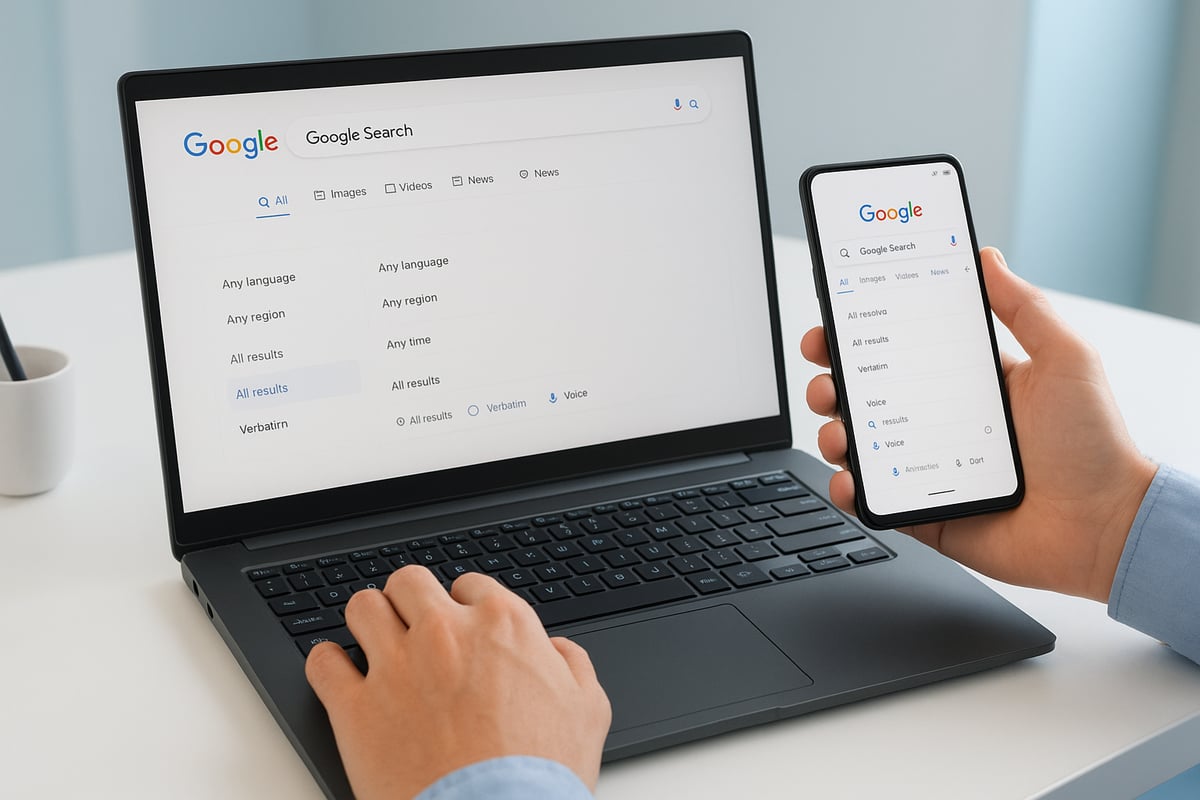
Once you enter a query in search google google search, filters and tools help you pinpoint exactly what you need. Start with time filters to find the most recent news or explore historical data. For example, when researching breaking news, set the filter to "Past 24 hours" to ensure you see the latest updates.
Location filters let you choose between local and global results. If you are looking for restaurants, maps, or events, Google automatically suggests options near your location. For academic or government research, use site-specific or filetype searches, such as site:.gov or filetype:pdf to target authoritative content.
Explore different tabs like Images, Videos, News, and Shopping. Each tab tailors results to your intent. For instance, the News tab aggregates headlines from trusted sources, while Shopping compares products and prices across retailers.
Here is a practical step-by-step for applying filters:
- Enter your query in search google google search.
- Select the appropriate tab or click "Tools" just below the search bar.
- Choose your desired time, region, or content type filter.
Filters improve both the relevance and accuracy of your results. For those seeking even more advanced strategies, consider exploring AI optimization hacks for better search to take your searching to a new level.
Exploring Google’s Rich Results and Featured Snippets
Modern search google google search goes beyond traditional links. Rich results—such as featured snippets, knowledge panels, and "People Also Ask" boxes—provide direct answers and summaries right on the results page.
Featured snippets display concise responses to questions, often in a step-by-step or list format. For example, searching "how to tie a tie" often brings up a detailed snippet with images and instructions, saving you time. Knowledge panels appear for well-known people, places, or topics, offering quick facts and links to related information.
Google selects these rich results using structured data and schema markup provided by website owners. The more clearly a page is structured, the more likely it will appear as a snippet or panel.
Voice search relies heavily on these concise, snippet-friendly answers. As voice and visual searches grow, expect even more rich results to surface. According to SEMrush, featured snippets now appear in over 20% of queries on search google google search.
To use rich results effectively, scan the top of the results page for direct answers, summaries, or related questions. These features help you get information faster, often without clicking through multiple websites.
Essential Google Search Features and Tools for Everyday Use
Unlocking the full benefits of search google google search means understanding the everyday features and tools designed to make your life easier, safer, and more informed. Whether you are looking for quick facts, managing your privacy, or verifying information, Google Search equips you with practical solutions that fit into your daily routine.

Search Features That Make Life Easier
The power of search google google search shines through its ability to deliver instant answers and versatile tools. Need the current weather, a quick currency conversion, or tomorrow's sports scores? Google displays this information right at the top of your results, saving you time and effort.
Google Lens transforms your camera into a search tool. Point your smartphone at a plant, landmark, or product to identify, translate, or shop instantly. In 2024, over 1 billion questions were answered through Google Lens, demonstrating its growing utility.
Google Translate is built directly into search google google search, letting you translate words, phrases, or entire web pages with just a click. This is especially helpful for travelers, students, and professionals working with global content.
Shopping features streamline your experience by collecting product reviews, price comparisons, and availability in one place. For example, you can check a flight status, track a package, or even find local store hours without leaving the search page.
Here is a quick summary of essential features:
| Feature | What It Does | How to Use It |
|---|---|---|
| Quick Answers | Shows instant facts, calculations, and more | Type your question or calculation |
| Google Lens | Visual search using your camera | Tap the Lens icon in the search bar |
| Translate | Instantly translates text/web pages | Click 'Translate' in search results |
| Shopping | Compares prices and reviews | Use the Shopping tab or product search |
With these tools, search google google search becomes your all-in-one assistant for daily information needs.
Safety, Privacy, and Family Controls
Staying safe while using search google google search is a top priority. SafeSearch filters explicit content, making it ideal for families and schools who want a safer browsing experience. Over 2 billion accounts use SafeSearch controls today.
You have full control over your search history. Access "Your Data in Search" to view, manage, or delete your past searches. This feature allows you to keep your digital footprint tidy and relevant.
Privacy controls are easy to customize. Adjust personalization settings, manage ad preferences, or enable incognito mode for private searching. For families, setting up parental controls on a child's Google Account helps ensure a secure online experience.
Google remains committed to protecting user data and complying with privacy regulations. Here are some best practices for maintaining privacy:
- Regularly review your search google google search history.
- Set up SafeSearch and parental controls for young users.
- Check privacy settings and update them as your needs change.
By actively managing these controls, you ensure that your experience with search google google search is both private and secure.
Staying Informed: Fact-Checking and Evaluating Information
In a world filled with information, search google google search provides built-in tools to help you verify facts and assess credibility. When searching for news, you may see fact-check labels that highlight verified information from trusted sources.
Google offers features such as "About this result" and Fact Check Explorer to help you evaluate the reliability of a website or article. For example, during breaking news events, these tools can help you identify misinformation before sharing or acting on it.
While search google google search offers advanced verification features, critical thinking remains essential. Take time to cross-reference sources, check for fact-check labels, and use Google's tools to make informed decisions.
The Future of Google Search: AI, Personalization, and Search Trends for 2025
The landscape of search google google search is rapidly evolving as we enter 2025. New advancements in artificial intelligence, personalization, and user-driven trends are reshaping how we find and interact with information. Understanding these changes will help you navigate the future of search google google search with confidence.
Generative AI and Search: What’s Changing?
Generative AI is revolutionizing search google google search by introducing smarter, more conversational experiences for users. In 2025, Google has rolled out the Search Generative Experience, which uses advanced AI to not only summarize answers but also provide multi-step reasoning and contextual responses.
Instead of simply listing websites, the search google google search engine now crafts tailored summaries and guides based on your query. This means you can engage in a conversational flow, asking follow-up questions and receiving nuanced, up-to-date information. For example, if you ask for travel tips, Google can generate a personalized itinerary, recommend attractions, and answer specific follow-ups in real time.
The impact of these changes is profound. Millions of queries every day now benefit from generative AI, making information retrieval faster and more intuitive. The shift also means users must adapt to new habits, such as interacting with AI summaries and evaluating generated content for accuracy. If you want to understand how this evolution affects search google google search and digital visibility, explore these Generative Engine Optimization insights.
Users have the flexibility to opt in or out of these features, maintaining control over their search experience. As AI continues to advance, expect even more personalized and conversational search results, making your interactions with search google google search smarter than ever.
Personalization and Privacy in the New Search Era
Personalization is at the core of search google google search in 2025. Google tailors results based on your location, previous searches, and individual preferences, offering you recommendations that feel uniquely relevant. For example, when searching for restaurants, you might see suggestions based on your dining history and current location.
However, this personalization brings privacy concerns to the forefront. Balancing convenience with privacy, Google provides tools like My Activity and ad settings, allowing users to manage their data and control how much personalization they receive. You can review, edit, or delete your search history, and adjust ad preferences to limit targeting.
The debate between convenience and privacy is ongoing. Many appreciate the efficiency of personalized results, but it is essential to stay informed about how your data is used. By exploring your privacy controls in search google google search, you can achieve the right balance for your needs and maintain trust in the platform.
Trends and Tips: Staying Ahead in Google Search
To stay ahead in search google google search, it is vital to adapt to emerging trends. Voice and visual search are on the rise, with more users relying on spoken queries and image-based searches through tools like Google Lens. Mobile-first and multimodal search experiences are becoming standard, ensuring seamless access across devices.
Users can leverage Google Assistant for hands-free searches, making information retrieval even more convenient. Providing feedback on your search experience helps shape future features and ensures Google evolves in ways that benefit everyone.
Keeping up with Google's updates is crucial. Regularly check official blogs and participate in beta programs to stay informed about new tools and features. By embracing innovation and adapting your habits, you will unlock the full potential of search google google search in the coming years.
Step-by-Step: How to Get the Most Out of Google Search in 2025
Unlocking the full potential of search google google search in 2025 requires a structured approach. Whether you are a student, professional, or casual user, following a proven process helps you find accurate, timely, and relevant information quickly. Here is a comprehensive step-by-step guide to mastering the basics.
Step 1: Define Your Search Goal
Start by clarifying what you want to achieve with search google google search. Are you looking for a quick fact, an expert opinion, a product review, or directions to a nearby restaurant? The more specific your goal, the easier it is to craft an effective query.
Break down complex questions into smaller parts. For example, if you need to research a medical condition, separate your queries into symptoms, treatments, and reputable sources. Use the “People Also Ask” feature to refine your approach and uncover related topics.
Specificity is key. Instead of searching “weather,” try “hourly weather forecast New York today.” Clear goals lead to faster, more accurate results with search google google search.
Step 2: Choose the Right Search Tools and Features
Selecting the right features within search google google search is essential. Decide which search tab best fits your goal: All, Images, News, Maps, or Shopping. Advanced search operators like site:.edu, filetype:pdf, or using quotation marks for exact phrases can dramatically improve precision.
Apply filters to narrow results by time, location, or content type. For instance, if you are conducting academic research, use “site:.edu” or “filetype:pdf” to target scholarly sources. Google Lens and voice search are ideal for visual or hands-free queries.
Organize your search process by leveraging these tools, ensuring you access the most relevant and authoritative information.
Step 3: Evaluate and Interpret Search Results
Once results appear, understanding the layout of search google google search results is crucial. You will typically see ads, featured snippets, organic results, and sometimes knowledge panels. Assess the credibility of each source before clicking.
Use features like “About this result” to check site reputation, and look for fact-check labels in news stories. For sensitive topics like health or finance, compare multiple sources and prioritize official or peer-reviewed content.
Efficient skimming helps, but always dig deeper when accuracy matters. This approach ensures your search google google search delivers trustworthy information.
Step 4: Refine and Iterate Your Search
If your initial results are not perfect, do not hesitate to adjust your search google google search. Modify keywords, use autocomplete suggestions, or try related searches at the bottom of the results page.
Start broad, then get specific. For example, shift from “best laptops” to “best laptops for college students under $1000” for more targeted answers. Use quotation marks for exact matches or a minus sign to exclude unwanted terms.
Persistence pays off. Iterating your queries leads to the most accurate and useful results in search google google search.
Step 5: Save, Share, and Manage Your Findings
After finding valuable information, save and organize it efficiently. Bookmark useful pages or use Google Collections to categorize results for easy retrieval. Sharing results via email, messaging apps, or social media streamlines collaboration, especially for group projects or travel planning.
For example, create a collection for recipes or trip itineraries. Manage your search history and privacy settings to keep your activity organized and secure. These habits help you maximize the benefits of search google google search for both personal and professional use.
Step 6: Stay Updated on New Google Search Features
Search google google search is constantly evolving. Stay ahead by following official Google Search blogs, update pages, and participating in Search Labs or beta programs. This lets you access new features, such as generative AI results, before they are widely available.
For deeper insights into the future of search, explore resources like Google vs. AI Search in 2025. Providing feedback on new features helps shape the tools you use every day.
Continuous learning ensures you always get the most out of search google google search as technology advances.
Resources and Further Learning
Expanding your knowledge of search google google search is crucial for keeping up with the latest updates and search trends. Whether you are a beginner or seeking advanced strategies, there are numerous high-quality resources available to guide your journey.
Essential Resources for Mastery:
- Google Search Help Center: Step-by-step guides, troubleshooting, and FAQs for all search google google search users.
- Google Search Central: Best practices, technical documentation, and webmaster tools for those looking to optimize their online presence.
- Educational Videos and Tutorials: Explore YouTube playlists, including the Google’s March 2025 Core Update Analysis, to stay informed about significant changes and algorithm updates.
- Recommended Reading: “How Search Works,” “Search Essentials,” and the “SEO Starter Guide” provide foundational and advanced insights.
- Tools for Trends and Fact-Checking: Utilize Google Trends to analyze what the world is searching for, and Fact Check Explorer to verify information.
- Community Forums: Join discussions, ask questions, and share ideas with peers and experts in Google’s official forums.
Continuous learning is essential as search google google search evolves. By leveraging these resources and engaging with the community, you will stay ahead of new features, best practices, and industry standards.