

The search world is shifting faster than ever before, creating a pivotal moment for digital marketers and brands. Are you prepared for how seo aeo will reshape your business in 2026?
Today, search is no longer just about ranking on Google. Artificial intelligence, answer engines, and changing user habits are rewriting the rules. If you rely on yesterday’s strategies, you risk falling behind as new technologies take center stage.
This guide will help you understand the new era, from the fundamentals of SEO and AEO to the actionable steps you need to stay visible. Ready to master the future of search and secure your digital advantage? Let’s begin.
Understanding SEO and AEO: Definitions and Core Principles
The future of search is rapidly evolving, and understanding the core principles behind seo aeo is essential for any business aiming to stay competitive. As digital landscapes shift, knowing how traditional and AI-driven optimization work will help you adapt and thrive.
What is Search Engine Optimization (SEO)?
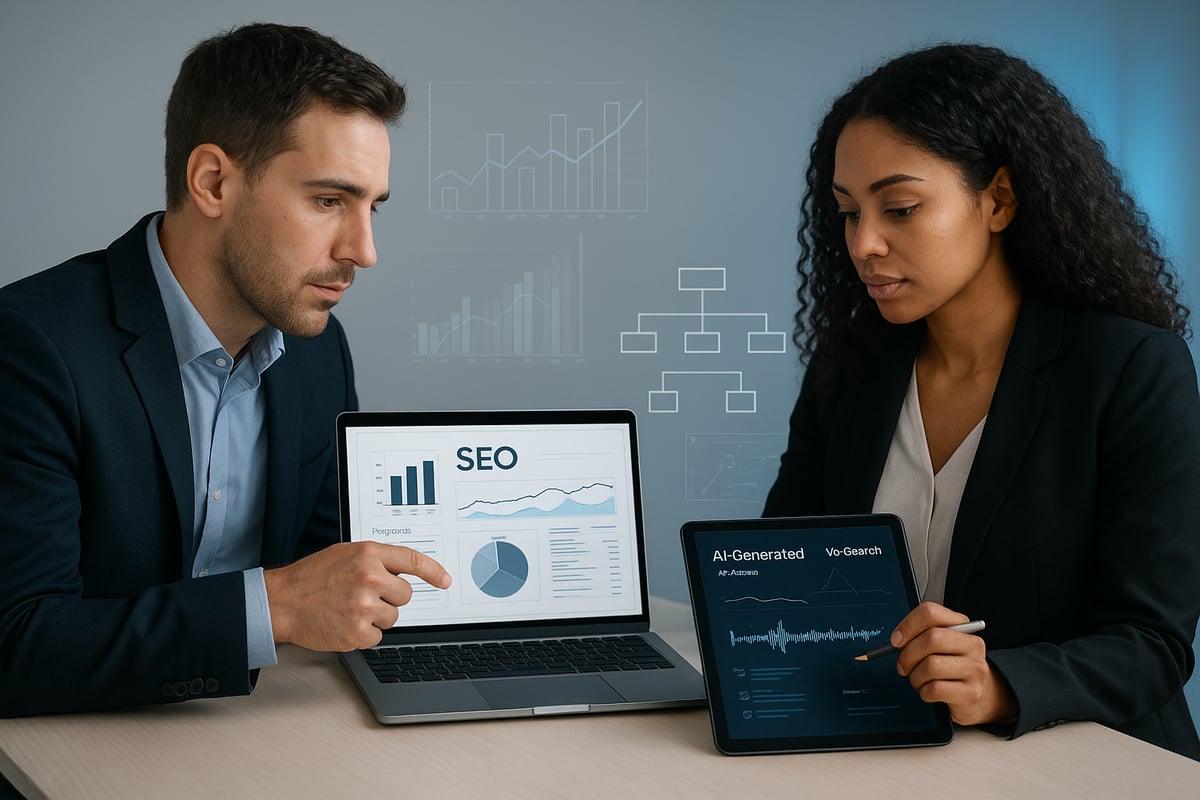
Search Engine Optimization, often called SEO, has been the backbone of digital visibility since the 1990s. At its core, seo aeo starts with SEO, which focuses on enhancing a website’s presence in search engine results like Google and Bing.
The primary goal is to drive organic traffic by ranking higher for relevant keywords. Key tactics include keyword research, backlinking, on-page optimization, and ensuring technical site health. Content is typically long-form and keyword-rich, designed to capture users at every stage of the funnel, from awareness to conversion.
For example, ecommerce and publishing sites have long relied on traditional SEO strategies to build steady traffic streams. In fact, SEO is responsible for over 40% of online revenue, highlighting its importance for businesses of all sizes. To dive deeper into foundational tactics, see Traditional SEO strategies explained.
SEO remains vital for building brand authority and capturing traffic, but the landscape is shifting as new technologies emerge.
What is Answer Engine Optimization (AEO)?
Answer Engine Optimization, or AEO, represents the next evolution in seo aeo. With the rise of AI-powered platforms like ChatGPT, Perplexity, and Gemini, AEO focuses on securing brand visibility through direct, conversational answers.
The core purpose of AEO is to ensure your content is selected by AI engines to answer user questions instantly—often in voice-based or zero-click formats. Tactics include using structured data, schema markup, and well-crafted FAQs to make information easily digestible for AI models. Content is typically short, scannable, and answer-driven, prioritizing clarity and precision.
Consider how brands now appear as cited sources in Google AI Overviews or in ChatGPT responses. With over a billion voice searches occurring every month and 65% of Google queries resulting in zero clicks, optimizing for AEO is crucial for future-proofing your digital presence. This shift requires adapting content to meet the needs of both users and AI-driven platforms, ensuring you remain visible as search behaviors evolve.
Why the Distinction Matters in 2026
The line between seo aeo is more important than ever as AI transforms how people search. Traditional search engines still matter, but conversational, AI-driven queries are rapidly gaining ground.
Users now expect immediate answers, often without clicking through to websites. This trend is driving multi-platform visibility to the forefront. Relying solely on SEO can be risky, as AI answer engines capture more attention and traffic. For instance, many publishers have noticed declining click-through rates as AI-generated answers appear before organic results.
Brands must adapt by embracing both SEO and AEO strategies. The future belongs to those who integrate these approaches, ensuring their content is discoverable across all platforms and formats.
Key Differences Between SEO and AEO: A 2026 Perspective
The evolution of search has brought the seo aeo debate to the forefront. As we enter 2026, understanding the distinctions between these two disciplines is crucial for brands aiming to stay visible across both classic search engines and emerging AI-driven platforms. Let us break down the nuanced differences shaping digital strategy today.
Goals and Objectives
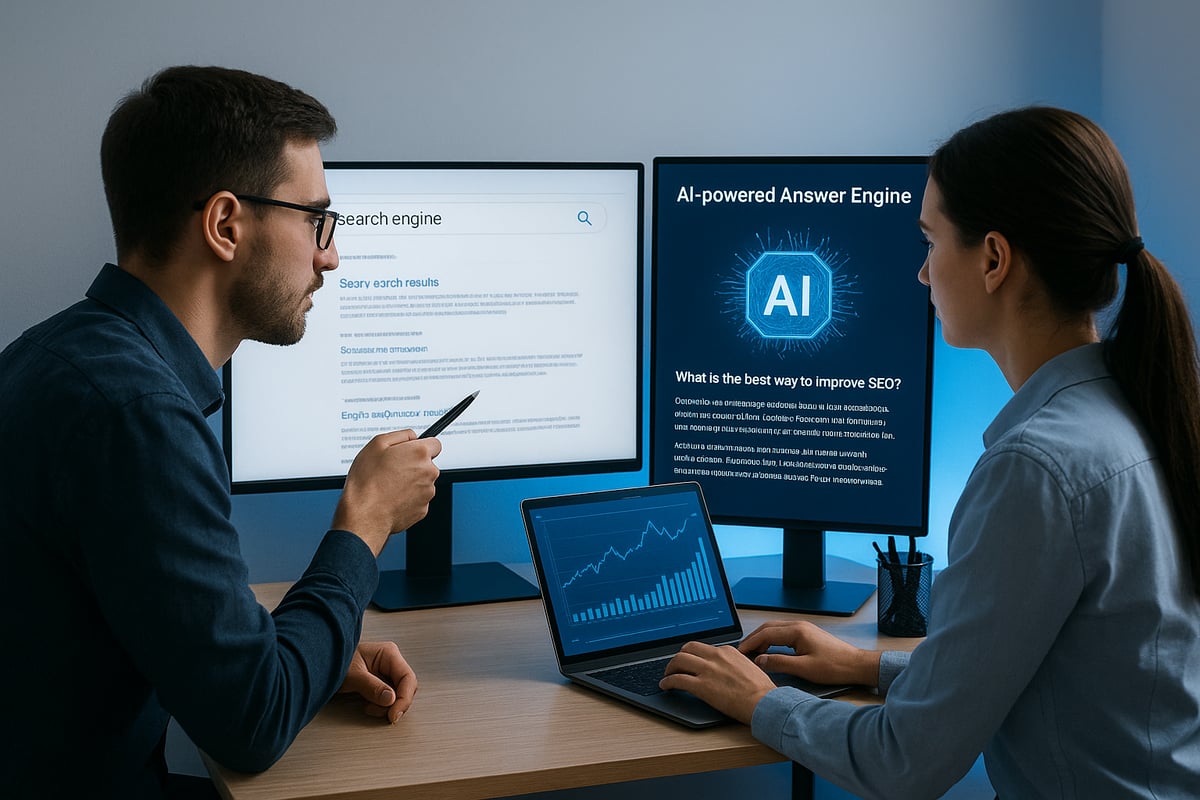
SEO and AEO each serve unique purposes in the 2026 digital landscape. The primary goal of SEO is to drive traffic by achieving higher rankings in search engine results pages. This approach is designed to capture clicks and conversions, making it a cornerstone for e-commerce, publishers, and service providers.
On the other hand, AEO is focused on delivering direct, authoritative answers through AI and voice interfaces. The objective shifts from encouraging users to click a link to positioning your brand as the trusted source within AI-generated responses. For example, SEO may target product pages for purchase intent, while AEO prioritizes earning featured snippets or citations in AI overviews.
Recent data shows that over 65 percent of searches now result in zero clicks, largely due to AI overviews. This change in user behavior demands a dual strategy. As seo aeo competition intensifies, engagement metrics are evolving to reflect both visibility and authority.
Comparison Table: SEO vs. AEO Goals
| Aspect | SEO | AEO |
|---|---|---|
| Main Objective | Traffic & conversions | Direct, instant answers |
| Primary Metric | Clicks/CTR | Authority/citations |
| Example | Product pages ranking | Featured snippets, AI cites |
Optimization Methods and Technical Approaches
The technical landscape for seo aeo is rapidly changing. SEO relies on keyword optimization, link building, and maintaining site health through technical audits. These methods ensure search engines like Google and Bing can easily crawl and index your content.
AEO, in contrast, prioritizes structured data, schema markup, and content designed for AI crawlers. Tools like LLMS.txt are emerging, acting as a guide for AI bots much like robots.txt did for traditional search engines. For instance, optimizing FAQ sections with schema is more impactful for AEO, while meta tag optimization remains vital for SEO.
AI crawlers are still maturing, which means technical strategies must adapt. Marketers are learning to balance seo aeo tactics, ensuring both classic and AI engines can access and interpret content correctly.
Content Formats and User Experience
Content strategy is another area where seo aeo diverge. SEO favors long-form articles, detailed guides, and comprehensive blog posts that address various user intents. This format is ideal for audiences seeking in-depth information and supports a range of funnel stages.
AEO, however, thrives on concise, answer-driven formats. Think FAQs, tables, bullet lists, and direct responses to specific questions. AI platforms often surface these brief, structured answers in their results. For example, a recipe website might see its detailed post summarized by an AI engine, with the user never visiting the site.
The reality is that AI engines frequently cite sources but do not always drive traffic. To succeed, content must strike the right balance: deep for SEO, direct for AEO, ensuring the seo aeo approach covers both bases.
Search Behaviors and User Journey
User search behavior is fragmenting, and seo aeo strategies must adapt. The shift from text-based queries to voice and conversational prompts is significant. AI engines, such as ChatGPT, now handle complex, long-tail questions that traditional search engines once dominated.
For example, a user might ask an AI, "Who is the best plumber near me?" rather than typing a keyword string into Google. Studies show that 73 percent of users now search beyond Google, tapping into AI platforms for answers.
This trend has major implications for local and service-based businesses. The user journey is no longer linear, requiring brands to optimize for multiple touchpoints. Embracing seo aeo ensures visibility throughout this evolving landscape. For a deeper dive into the competitive dynamics, see SEO vs. AI search engines.
The Evolving Search Ecosystem: Trends, Challenges, and Opportunities
The world of seo aeo is rapidly shifting as artificial intelligence takes center stage in the search landscape. In 2026, brands face a complex ecosystem shaped by new platforms, evolving user behaviors, and technology-driven disruptions. Understanding these trends is key to staying competitive.

The Rise of AI Engines and Multi-Platform Search
AI-powered engines like ChatGPT, Perplexity, Gemini, Claude, and Apple AI are now handling a significant share of global search queries. Traditional search engines still matter, but the rise of AI Overviews and zero-click searches is fundamentally changing how users find information.
Today, Google’s AI Overview often appears before organic results, providing instant answers and reducing the need for users to click through to websites. Over one billion voice searches are performed each month, reflecting a shift toward conversational and hands-free search. For businesses focused on seo aeo, this means that optimizing solely for traditional search engines is no longer enough.
Click-through rates (CTR) for publishers are dropping as AI platforms answer questions directly in the search interface. Early adopters of seo aeo, however, are positioned to build authority by appearing in these AI-driven answers. According to AI’s Impact on Search Behavior, consumer habits are evolving as users embrace AI-powered search, making multi-platform visibility a necessity for brands that want to stay ahead.
How Brands and Publishers Are Adapting
As seo aeo evolves, brands and publishers are rethinking their content strategies. E-commerce sites prioritize brand awareness and visibility across both traditional and AI-driven platforms, while publishers are exploring content licensing deals with AI companies. This approach helps them monetize their expertise even as traffic patterns change.
A major debate in the seo aeo community is whether to invest in optimizing for AI engines when website traffic is declining. For instance, recipe publishers have seen significant drops in visits due to AI-generated answers, while e-commerce brands may actually gain exposure through direct product recommendations in AI responses.
New key performance indicators (KPIs) are emerging. Instead of focusing solely on traffic volume, brands are tracking brand mentions, answer accuracy, and citation frequency within AI-generated content. The value of high-intent clicks is rising, making every visit more meaningful. Multi-pronged distribution strategies—spanning websites, social media, and AI platforms—are now essential for maximizing reach in the new seo aeo landscape.
Technical and Data Challenges in AI Optimization
The shift toward seo aeo brings a host of technical and data-related challenges. Standardized reporting for AI engine performance is still lacking, and webmaster tools for monitoring AI Overviews or answer engine results are limited. Brands often turn to alternative data sources, such as Reddit, TikTok, and other social platforms, to mine user questions and insights.
Another challenge is the prevalence of “hallucinations,” where AI engines provide inaccurate or misattributed answers. This can impact brand reputation and content trustworthiness. To address discoverability, the introduction of LLMS.txt serves as a new standard, similar to robots.txt, allowing site owners to manage how AI crawlers access their content.
Data privacy and content licensing concerns are also top of mind as more content is consumed directly through AI interfaces. Schema markup and structured data continue to play a critical role in ensuring accurate information is surfaced by AI engines. As the seo aeo ecosystem evolves, staying agile and embracing these technical innovations will be vital for future success.
Integrating SEO and AEO: Strategies for 2026 and Beyond
The future of digital visibility is no longer a battle between SEO and AEO. Instead, the most successful brands will integrate both approaches, building a holistic search presence that meets users wherever they begin their journey. As search evolves, a unified framework is essential for maximizing the benefits of seo aeo strategies.
Building a Unified Optimization Framework
Integrating seo aeo requires a strategic framework that goes beyond simply optimizing for Google rankings or AI answers. Start by mapping your content to serve both detailed search intent and rapid-fire AI-driven queries. For example, a product page can feature in-depth descriptions for SEO, while a dedicated FAQ section addresses common questions for AEO.
Structure your website so that long-form guides, how-to articles, and service pages are interlinked with concise, answer-ready modules. Use internal links to guide users from broad educational content to specific, actionable answers. This dual-pathway approach ensures that both traditional search engines and AI bots can easily extract and highlight your expertise.
Analytics play a vital role in this integrated framework. Track not only organic traffic and rankings, but also how often your content is cited by AI engines or appears in answer boxes. By analyzing both streams, you will quickly see which pieces of content drive authority and engagement across platforms. The true power of seo aeo lies in this synergy—when you optimize for both, your digital presence becomes much more resilient.
Actionable Tactics for Modern Search Success
To operationalize seo aeo, focus on tactics proven to perform in both traditional and AI-powered environments. Start by implementing robust schema markup for FAQs, reviews, and product information. This structured data makes your content more accessible to AI crawlers and increases your chances of being selected for direct answers.
Develop concise, answer-focused content blocks alongside your comprehensive guides. For instance, summarize each article with a short Q&A or a bulleted list. These formats are easily picked up by AI engines and voice assistants. Monitoring your brand’s presence in AI results is critical—track citations and mentions across platforms like ChatGPT, Perplexity, and Google AI Overviews.
Optimize for voice and conversational queries by anticipating how users might phrase their questions. For service-based businesses, targeting “best near me” queries in both Google and AI platforms is increasingly effective. To deepen your approach, explore resources such as AI optimization hacks for search for practical, up-to-date techniques.
Finally, prepare for zero-click and AI-overview environments by ensuring your most valuable information is front-loaded and easy to extract. Using tools like LLMS.txt and regular schema audits will help maintain discoverability in the evolving search ecosystem. The right blend of seo aeo tactics will keep your brand visible as user behavior shifts.
Next Engine Optimization (NEO): The Multi-Platform Solution
Looking ahead, businesses must consider solutions that bridge the gap between seo aeo and emerging channels. Next Engine Optimization (NEO) is designed to unify efforts across Google, ChatGPT, Claude, Perplexity, and more, creating a seamless digital footprint.
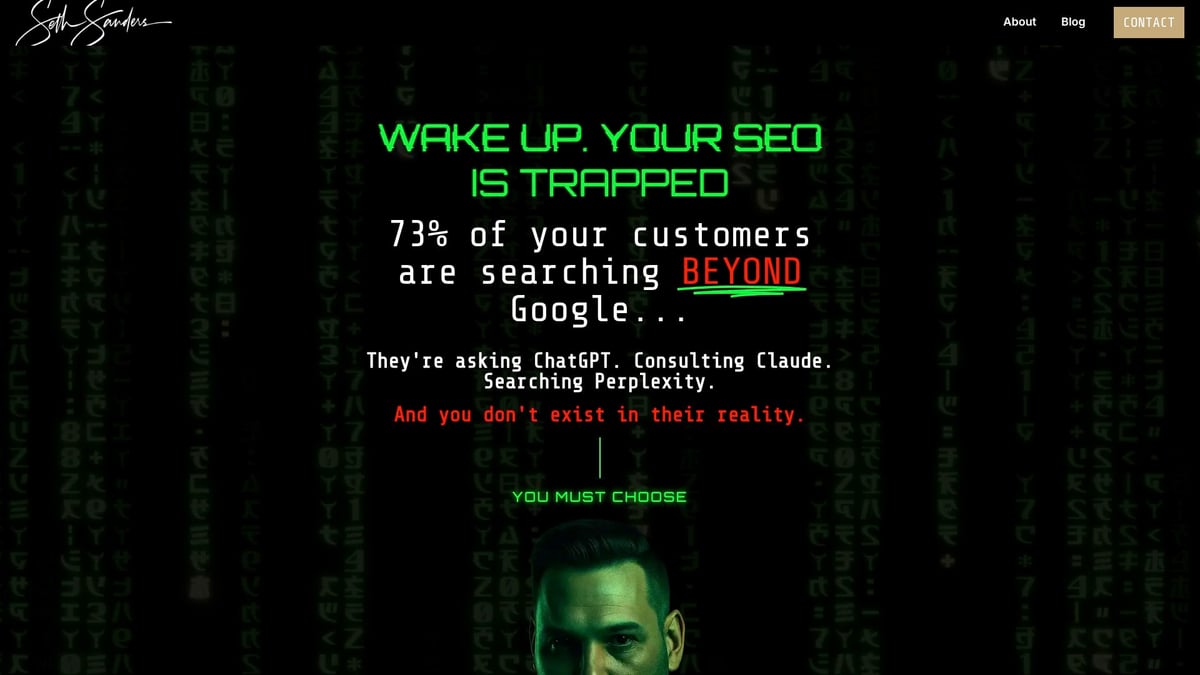
NEO empowers brands to optimize for both traditional search and AI-powered engines simultaneously. This multi-platform approach ensures that your content is discoverable not only in organic search results but also within AI-generated answers and summaries. By leveraging AI-powered retargeting, NEO helps re-engage users across various search and conversational touchpoints, increasing your brand’s authority and recall.
What sets NEO apart is its simplicity—no long-term contracts, flat pricing, and a clear money-back guarantee. This makes it ideal for SMBs and marketers seeking ROI beyond conventional SEO. For example, businesses using NEO have escaped the “SEO matrix,” achieving full-spectrum search dominance and future-proofing their visibility as the landscape evolves. Integrating seo aeo through NEO is the next logical step for brands ready to lead in 2026 and beyond.
Measuring Success: KPIs, Analytics, and the New Metrics of Search
Measuring success in the era of seo aeo requires a new mindset. As search evolves, so do the ways brands must track performance and prove ROI. Visibility is no longer just about ranking in Google, but about being cited, referenced, and trusted across both traditional search engines and AI-powered answer platforms.
Redefining Performance in a Multi-Engine World
The definition of success in seo aeo has shifted dramatically. Traditional SEO focused on keyword rankings, organic traffic, click-through rates, and conversions. These metrics are still important, but they no longer tell the whole story.
Today, AEO introduces new KPIs like featured snippet presence, AI engine citations, and the accuracy of brand representation in AI-generated summaries. The rise of zero-click searches means many users find answers without visiting a website at all. In fact, recent studies show that AI-generated summaries can shape user attitudes and influence decision-making, even before a click occurs. For a deeper look at this phenomenon, see how AI summaries influence user attitudes.
Consider the example of a brand monitoring its presence in Google AI Overviews and citations within ChatGPT or Perplexity. Success is no longer just about traffic volume, but about being the trusted source referenced in those answers. Manual audits, social listening, and monitoring brand mentions on AI platforms are becoming part of the standard measurement toolkit.
Here’s a quick comparison of evolving metrics:
| Traditional SEO Metrics | AEO & AI Metrics |
|---|---|
| SERP rankings | AI engine citations |
| Organic traffic | Featured snippet share |
| CTR | Brand accuracy in answers |
| Conversions | Citation frequency |
Ultimately, the new benchmark for seo aeo is visibility and authority across all search engines, not just the ones that drive clicks.
Tools, Reporting, and Future Analytics
Tracking performance in seo aeo is a growing challenge. Most analytics platforms were built for website visits, not for citations or mentions inside AI answers. As a result, brands must combine old and new tools to get a full picture.
Standard platforms like Google Search Console and Bing Webmaster Tools still provide valuable insights for traditional SEO. However, measuring AEO success means adopting third-party monitoring, schema audits, and newer solutions like LLMS.txt to guide AI crawlers. For those serious about optimization, Generative Engine Optimization insights offer a blueprint for tracking and improving AI visibility.
Brands are now tracking:
- Brand mentions in AI platforms (e.g., ChatGPT, Perplexity)
- Featured snippet presence
- Schema markup health
- User questions on social platforms (Reddit, TikTok)
- Manual audits of AI-generated answers
The lack of standardized reporting means businesses must be proactive. Continuous adaptation is vital, as AI platforms and analytics standards evolve rapidly. The future of seo aeo measurement will likely include new APIs, cross-platform reporting, and more granular data on how AI engines use and cite your content.
In this new landscape, success goes beyond clicks. It is about being present, authoritative, and accurate wherever users search for answers.
FAQs: SEO vs. AEO and the Future of Search
The future of search is rapidly evolving, and many businesses are asking critical questions about SEO AEO and how to adapt. Here are answers to the most common questions, designed to help you navigate the shifting landscape and build a resilient strategy.
Common Questions Answered
Can SEO and AEO work together, or must I choose one?
Absolutely, SEO AEO are most effective when integrated. Combining both ensures your content is discoverable through traditional search engines and AI-driven answer platforms, maximizing reach and authority.
Is AEO replacing SEO in 2026?
No, AEO is not replacing SEO. Instead, AEO builds on SEO fundamentals. Both are essential for complete visibility, especially as AI engines become more influential and traditional search platforms evolve.
How do I know if my content is being used by AI engines?
To monitor your SEO AEO effectiveness, track AI engine citations, brand mentions, and answer inclusions. While reporting tools are limited, manual audits and social listening can provide valuable insights.
What content formats work best for AEO?
For strong SEO AEO results, focus on FAQs, concise summaries, and schema-rich pages. These formats help AI engines extract and present your information accurately in direct answers.
Will optimizing for AI engines hurt my traditional SEO?
Proper integration of SEO AEO strategies enhances both. Avoid cannibalizing your long-form content by mapping out which pages serve search engines and which target answer engines.
Do I need new tools or agencies for AEO?
Emerging solutions are available for SEO AEO, including multi-platform optimization providers and schema tools. Evaluate options that help you adapt to changing AI and search requirements.
How can small businesses compete in the AI-driven search era?
Small businesses can succeed with SEO AEO by focusing on niche expertise, using structured data, and creating unified strategies. This approach levels the playing field, even as platforms diversify.
What’s the best way to future-proof my search strategy?
Regular audits, adaptation, and diversification across SEO AEO channels are key. Staying informed about industry trends, such as the surge in AI-driven search ad spending, will keep your strategy ahead of the curve.
As we’ve explored, the future of search isn’t about choosing between SEO and AEO—it’s about bringing them together for true multi-platform visibility. If you’re ready to make sure your business stands out on Google and the latest AI engines, you don’t have to navigate this shift alone. Let’s talk about how you can future proof your digital presence and start seeing real results—without long term contracts or hidden fees. I’d love to help you take the next step, so if you’re curious about what’s possible, Book a call.