

Is your organic traffic slipping away even though you follow every traditional seo best practice? You are not alone. As online search transforms, what once worked is no longer enough.
Today, businesses face a new reality. Search is shifting from Google-centric tactics to AI-driven and multi-platform discovery. This evolution leaves many wondering how to adapt and stay visible in 2026.
In this article, you will find a clear, side-by-side comparison of traditional seo and the latest strategies. We will define the foundations, explore cutting-edge approaches, and share actionable steps to help you future-proof your visibility.
Ready to uncover what truly works for digital growth in 2026? Let’s dive in.
Defining Traditional SEO: Foundations and Limitations
Understanding traditional seo is essential for any business aiming to build a solid digital foundation. For years, this approach has been the standard, focusing on optimizing websites to rank higher in search engine results, primarily Google. However, as search evolves, it is crucial to recognize both the strengths and the boundaries of traditional seo.

Core Elements of Traditional SEO
Traditional seo is built on a few core pillars:
- On-page optimization: This includes crafting meta tags, targeting keywords, and structuring content for clarity and relevance.
- Off-page SEO: Building backlinks, submitting to directories, and earning mentions from reputable sites are essential.
- Technical SEO: Ensuring your site is crawlable, using sitemaps, and optimizing site speed.
- Local SEO basics: Maintaining a Google Business Profile and ensuring NAP (Name, Address, Phone) consistency.
- Traditionally, efforts focus on Google’s algorithms and ranking for desktop and mobile web searches.
- For example, a business might target “track shoes” for national reach or “track shoes in Boise” for local results.
- Data shows that over 90 percent of global search traffic has historically come through Google, underlining the dominance of traditional seo.
Limitations of Traditional SEO Approaches
Despite its strengths, traditional seo faces significant limitations in today’s landscape.
- Businesses are highly dependent on Google’s algorithm updates, which can abruptly change rankings.
- Competing for broad, high-volume keywords is increasingly difficult, especially in saturated markets.
- Results can be slow, and returns diminish as more competitors enter the space.
- Traditional seo does not address optimization for AI or chatbot-driven search, limiting reach beyond search engines.
- Issues like duplicate content and scaling local campaigns for multi-location brands persist.
- For example, a national retailer may struggle to scale local SEO for every branch.
- According to recent studies, 70 percent of marketers have seen a decline in organic click-through rates after 2024.
- For a deeper look at these challenges, see Are traditional SEO agencies dead?.
When Traditional SEO Still Works
Traditional seo continues to deliver value in certain scenarios.
- Established brands with strong domain authority still benefit from classic techniques.
- Niche markets with minimal competition see reliable results.
- Local businesses with a single location can effectively reach their immediate audience.
- Informational content aimed at evergreen queries remains effective for blogs, news, and resource hubs.
- Best practices include regular site audits, publishing high-quality content, and earning authoritative backlinks.
- For instance, a small law firm can rank well for “estate planning attorney [city]” by focusing on traditional seo fundamentals.
- In these cases, traditional seo provides a stable and cost-effective path to visibility.
Challenges Facing Traditional SEO in 2026
The landscape for traditional seo is rapidly changing as new technologies reshape user behavior.
- The rise of zero-click searches and AI-generated answers is reducing organic traffic to websites.
- Google’s evolving SERP layouts display more information directly, further lowering click opportunities.
- AI chatbots and generative search engines are becoming major competitors for user attention.
- Users are increasingly searching across multiple platforms, fragmenting the journey and making visibility harder to sustain.
- Voice assistants now deliver answers without referencing traditional web listings, bypassing classic optimization methods.
- Recent data shows that 60 percent of users start some queries outside Google, highlighting the urgency to adapt beyond traditional seo.
The Rise of Modern SEO Strategies: AI, GEO, and Multi-Platform Optimization
The digital landscape is shifting, and traditional seo alone can no longer guarantee visibility. As search habits and technologies evolve, modern SEO strategies have emerged, blending AI, generative engines, and multi-platform tactics to help brands stay ahead.
What Is Modern SEO in 2026?
Modern SEO in 2026 is defined by its integration of advanced AI Engine Optimization (AEO) and Generative Engine Optimization (GEO). Unlike traditional seo, the focus now extends beyond Google to include platforms like ChatGPT, Claude, Perplexity, and Gemini.
Content is crafted for conversational, intent-driven experiences. Structured data and entity-based optimization are critical, enabling search engines and AI to understand and recommend your brand. For example, optimizing content to appear in AI chatbot summaries ensures visibility wherever users search.
This multi-platform approach ensures your business is discoverable whether users search by voice, text, or image.
AI Engine Optimization (AEO) Explained
AI Engine Optimization is about tailoring your digital presence for AI chatbots and virtual assistants. While traditional seo prioritizes Google rankings, AEO focuses on making content easily digestible for AI models.
Structured data and schema markup become essential for context. Businesses must optimize for direct answers and conversational queries, ensuring their content is cited as a trusted source by AI systems like ChatGPT or Claude.
With 40 percent of Gen Z using AI chatbots for product research, brands that adapt their SEO for these engines will capture a growing audience.
Generative Engine Optimization (GEO) and Its Impact
Generative Engine Optimization is the process of making content visible and authoritative in generative AI-powered search engines, such as Perplexity and Gemini. Unlike traditional seo, GEO strategies include content chunking, rich FAQs, and sourcing from trusted authorities.
As AI engines synthesize data from multiple platforms, being featured in a “Sources” panel can drive significant discovery. Generative engines now account for 25 percent of all search discovery, a number that continues to grow.
For a deeper dive, see Generative Engine Optimization explained, which explores these strategies in detail.
Multi-Platform Visibility and Retargeting
Today’s consumers rarely stick to one platform. Modern SEO means ensuring your brand is discoverable on search engines, social networks, and AI-driven platforms. Unlike traditional seo, this approach involves adapting content for each channel, including snippets, summaries, and multimedia.
AI-powered retargeting lets you re-engage users who first interact with your brand via chatbot or voice search. Most buyers now use at least three platforms before making a purchase, so seamless cross-channel visibility is essential.
This multi-platform strategy helps keep your brand top of mind throughout the customer journey.
The Role of Local and Hyperlocal SEO in Modern Strategies
Local SEO has evolved beyond the basics of traditional seo. Advanced landing pages now feature rich content, multimedia, and authentic reviews tailored to specific regions.
Geo-targeted offers and dynamic content adapt to user locations in real time. Integration with AI-powered local search, such as “near me” queries via voice assistants, is crucial.
For example, a restaurant’s menu and reviews can be surfaced by AI assistants, directly influencing buying decisions. With 78 percent of local mobile searches resulting in offline purchases, hyperlocal optimization drives real-world results.
Key Tools and Technologies for Modern SEO
Modern SEO strategies rely on a suite of AI-driven tools. Platforms for keyword and entity research, automated schema generators, and cross-platform analytics dashboards help businesses move beyond traditional seo methods.
AI-powered content optimization and summarization tools streamline updates and ensure ongoing relevance. Solutions like Semrush, SurferAI, and custom AEO platforms support continuous learning and adaptation.
By leveraging these technologies, brands can monitor performance, identify new opportunities, and future-proof their digital visibility.
Side-by-Side Comparison: Traditional SEO vs. Modern Strategies
As the digital landscape transforms, understanding the difference between traditional seo and modern strategies is vital for maintaining visibility. Below, you will find a direct comparison across core approaches, metrics, costs, scalability, and risks, helping you choose the right path for your business in 2026.
Core Differences in Approach and Execution
The core of traditional seo relies on Google search, keyword targeting, and manual optimization. Modern strategies, in contrast, center on user intent, AI platforms, and rapid adaptation. Here is a direct comparison:
| Aspect | Traditional SEO | Modern Strategies |
|---|---|---|
| Focus | Keywords, Google SERPs | Intent, entities, multi-platform |
| Execution | Manual updates, static content | AI-driven, dynamic, cross-channel |
| Iteration Speed | Slow, audit-based | Rapid, data-driven |
| Example | Blog post for “best laptops” | AI-summarized FAQ for all engines |
Traditional seo is methodical and predictable, while modern approaches are flexible and adapt to changing user behaviors.
Performance Metrics: What Matters Now?
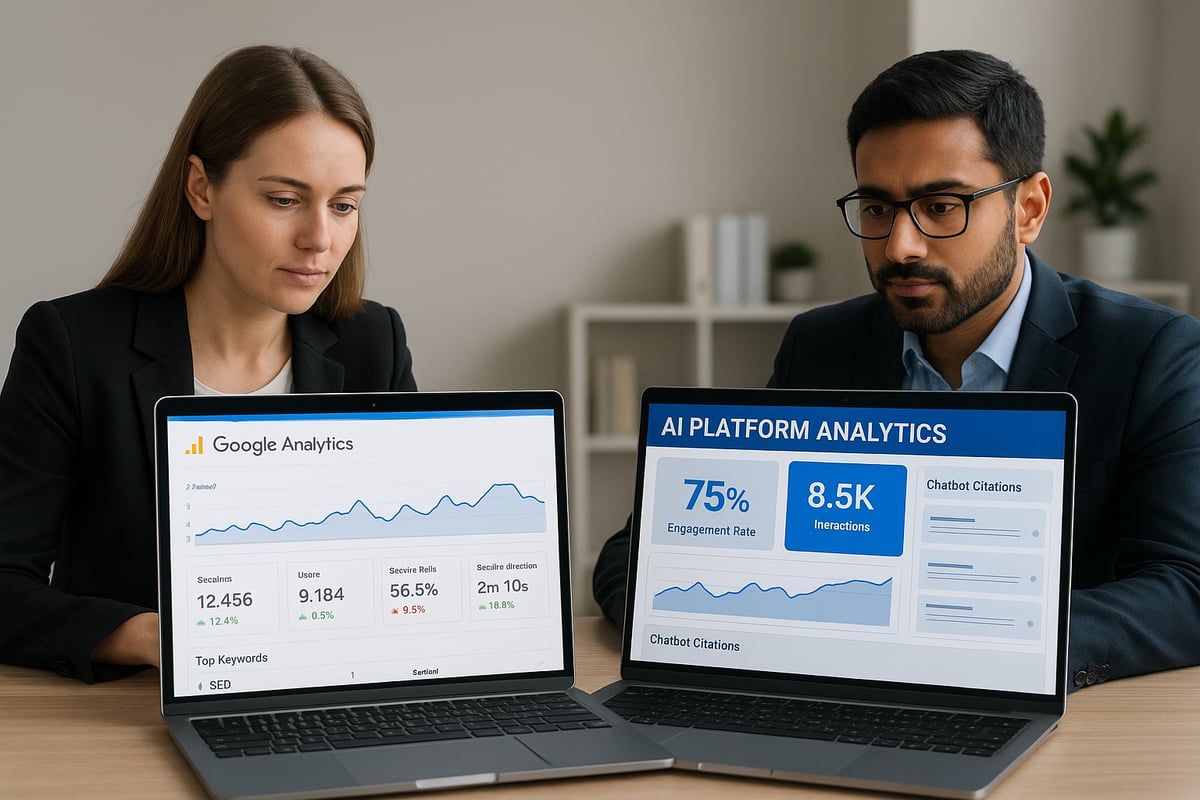
Performance metrics have shifted. For traditional seo, rankings, organic clicks, and backlinks remain primary. Modern strategies track AI citations, cross-platform visibility, and user engagement.
- Traditional: Focus on SERP positions, traffic volume, and referral links.
- Modern: Emphasize mentions in AI-generated summaries, brand discovery events, and engagement across platforms.
For example, a brand might track how often it appears in ChatGPT or Perplexity summaries, not just Google. In 2026, 30 percent of brand discovery occurs outside Google, highlighting the need to evolve beyond traditional seo.
Cost, ROI, and Resource Allocation
Cost structures differ significantly. Traditional seo often requires high monthly retainers and long-term contracts, with slower ROI. Modern solutions offer flexible, flat-rate pricing and faster feedback loops.
- Traditional seo: Agencies may charge $2,000 or more per month.
- Modern platforms: Flat rates around $499 monthly, no contracts.
This shift allows businesses to reallocate resources from manual outreach to AI-powered optimization. For a deeper breakdown, see SEO monthly costs compared. Many organizations report a 50 percent reduction in time-to-results with modern tactics.
Scalability and Adaptability
Scaling traditional seo is challenging, especially for multi-location or multilingual brands. Content updates and link building become time-consuming as the site grows.
Modern strategies leverage AI for automated content creation, geo-targeting, and real-time updates. For example, a brand can manage 100 plus local landing pages with AI assistance, something nearly impossible with legacy traditional seo alone.
Today, 80 percent of enterprises invest in multi-platform SEO to keep pace with evolving user behavior.
Risks and Pitfalls of Each Approach
Both traditional seo and modern strategies carry risks. Traditional methods risk over-reliance on Google and slow adaptation to change. Modern strategies may suffer from over-automation, AI content inaccuracies, or privacy issues.
A hybrid approach, blending the stability of traditional seo with the innovation of modern tactics, mitigates these risks. For example, regularly reviewing AI-generated content for accuracy helps maintain trust while expanding visibility.
Case Studies and Real-World Examples: Successes and Failures
Is traditional seo still effective in 2026? Let us examine real-world examples to see how businesses fare when they stick to old tactics, embrace AI-driven strategies, or blend both. These case studies reveal what works, what fails, and how the landscape is shifting.
Brands Sticking with Traditional SEO
Some businesses still rely on traditional seo for visibility. Take a local law firm that focuses on classic on-page and off-page tactics. By optimizing meta tags, building authoritative backlinks, and maintaining a consistent Google Business Profile, they achieve steady rankings for "estate planning attorney [city]."
However, even with these efforts, organic click-through rates are dropping. After the 2025 Google update, this firm saw a 20 percent decline in organic traffic. The limitation is clear: traditional seo remains viable in niche, low-competition markets, but struggles as search platforms evolve.
Brands Adopting Modern, AI-Driven Strategies
E-commerce brands are quick to pivot from traditional seo by optimizing for AI chatbots and generative engines. One standout example is a brand that rebuilt its product pages with FAQ-rich content, structured data, and conversational answers.
This approach led to frequent features in ChatGPT and Perplexity recommendations. The result was a 35 percent increase in cross-platform leads and conversions. By moving beyond traditional seo, these brands capture attention where users now search and interact.
Multi-Location and Hybrid Model Examples
Restaurant chains face unique challenges that traditional seo alone cannot solve. A forward-thinking chain implemented dynamic, AI-optimized landing pages for each location. These pages included localized menus, multimedia content, and real-time reviews.
As a result, the brand achieved higher visibility in "near me" voice searches and AI assistant recommendations. Sixty percent of their bookings now originate from AI and voice referrals. Scalability, automation, and adaptation are key for multi-location growth—far beyond what traditional seo can deliver.
Failures and Lessons Learned
Some brands ignored the shift from traditional seo and paid the price. A national retailer continued to rely solely on Google rankings, neglecting AI and generative platforms. When user search habits changed, their leads dropped sharply.
Duplicate content penalties and missed AI citations further hurt performance. The lesson is clear: inflexibility and dependence on traditional seo lead to lost market share. Continuous adaptation is essential for survival in the new digital ecosystem.
Hybrid Approaches: Blending Old and New
A growing number of businesses combine traditional seo with modern, AI-focused tactics for resilience. For example, a small business uses regular audits, AI-generated content summaries, and enhanced local seo to maintain strong Google rankings while expanding reach on emerging platforms.
This hybrid approach doubles their overall visibility compared to a single-channel focus. For a deeper look at how blending Google vs AI search strategies can drive success, see our dedicated guide. The most effective strategies in 2026 maximize opportunity by uniting the best of both worlds.
Next Engine Optimization (NEO): Bridging Traditional and Modern SEO
Staying visible online is harder than ever. As traditional SEO tactics alone no longer guarantee results, businesses face a fragmented search landscape where Google, AI chatbots, and generative engines each demand attention. The need for a unified approach has never been greater.
Next Engine Optimization (NEO) is designed to bridge the gap between traditional SEO and the demands of modern digital discovery. By integrating core elements of traditional SEO with cutting-edge AI Engine Optimization (AEO) and Generative Engine Optimization Overview, NEO empowers brands to thrive on Google, ChatGPT, Claude, Perplexity, Gemini, and beyond. This holistic strategy ensures your content is discoverable by both search engines and AI-driven platforms.
What sets NEO apart? The platform offers multi-platform visibility, so your brand appears where users actually search and ask questions today. AI-powered retargeting helps re-engage visitors after their first interaction, while cross-platform analytics deliver deep insights into performance across channels. With NEO, you can adapt your content for voice, chat, and traditional web search, maximizing every opportunity for organic growth.
The benefits are clear:
- No long-term contracts
- Flat-rate pricing, making budgeting predictable
- A 30-day money-back guarantee for peace of mind
NEO is built for small and medium businesses, local service providers, and companies that want to future-proof their digital presence. Unlike legacy agencies that focus only on traditional SEO, NEO’s approach is dynamic and tailored for the evolving search ecosystem.
How does NEO compare to legacy SEO agencies?
| Feature | NEO | Traditional SEO Agency |
|---|---|---|
| Search Coverage | Google + AI/Chatbots/Gen | Google only |
| Pricing Model | Flat-rate, no contract | High retainer, long contract |
| AI Optimization | Included (AEO, GEO) | Rarely included |
| Analytics | Cross-platform dashboard | Google-centric |
| Retargeting | AI-powered | Manual or missing |
Instead of paying $2,000 or more each month for slow, Google-only results, NEO clients get comprehensive coverage for $499 monthly, with faster feedback and more flexibility. This shift allows brands to invest in visibility where it matters most.
Consider a recent example: A local restaurant chain switched to NEO and saw its visibility on AI platforms surge in just 30 days. Its menu, reviews, and offers started appearing in voice assistants and chatbot recommendations, driving new customer visits and bookings. The brand’s traditional SEO remained strong, but new AI-driven channels delivered measurable growth.
The key insight? Relying on traditional SEO alone is no longer enough. To future-proof your business, you need a unified, adaptable strategy that bridges the old and new. NEO delivers that bridge, empowering you to stay ahead in a rapidly changing digital world.
The Future of SEO: Trends and Predictions for 2026 and Beyond
Is your traditional seo approach keeping up with the digital world? As we move toward 2026, the lines between search engines, AI assistants, and generative platforms are blurring. Understanding what's next is crucial for anyone who wants to maintain online visibility.
Evolving Search Behaviors and Platforms
User search behavior is rapidly changing. AI assistants and generative search engines are now central to how people find information, products, and services. This shift reduces reliance on traditional seo, as fewer users click through classic organic listings.
The rise of multi-modal search means users want answers through text, voice, images, and even video. For example, it's common to see users ask ChatGPT for product recommendations rather than typing queries into Google. According to recent data, 55% of searchers now use AI platforms weekly. For a deeper dive on how AI chatbots are reshaping search, read AI Chatbots’ Impact on SEO.
Content Creation and Optimization in the AI Era
Content strategies in 2026 focus on expertise, authority, and trustworthiness. Traditional seo methods like keyword stuffing are less effective. Instead, brands must prioritize value-driven, user-centric content that answers real questions.
AI-generated summaries, FAQ sections, and interactive tools help brands stand out. Many leading websites now publish "AI-friendly" knowledge bases designed for both users and AI engines. In fact, 70% of top-ranking content in 2026 is AI-optimized. For more expert analysis on these trends, check out AI SEO Insights for 2026.
The Role of Data, Privacy, and Regulation
As AI becomes a bigger part of search and content creation, data privacy and transparency are under the spotlight. Businesses must ensure their traditional seo and modern strategies comply with evolving privacy laws and AI regulations.
Generative engines are starting to label sources and provide clear attribution. This transparency builds user trust, which is now a ranking factor in many algorithms. Responsible use of AI-generated content and careful data management are no longer optional.
Actionable Steps for Businesses
Adapting your traditional seo for the future means taking proactive steps:
- Audit your current seo and identify areas for AI optimization.
- Invest in structured data, multi-platform content, and advanced analytics.
- Monitor emerging platforms and update strategies regularly.
- Generate monthly visibility reports across both Google and AI engines.
Blending traditional seo with new AI-driven tactics ensures your brand remains discoverable as the search landscape evolves. Businesses that act now will be ready for whatever comes next.
Frequently Asked Questions (FAQ)
Are you curious about the future of traditional seo and how it compares to modern approaches? This FAQ answers the most pressing questions for businesses navigating the evolving search landscape in 2026.
What is the difference between traditional SEO and modern SEO strategies?
Traditional seo centers on optimizing website content, keywords, and backlinks primarily for Google search. Modern strategies expand this focus, optimizing for AI chatbots, generative search engines, and multi-platform discovery. This means businesses must adapt to new content formats, user intents, and search behaviors to maintain visibility.
How do AI chatbots and generative engines impact SEO in 2026?
AI chatbots and generative engines are changing how users find information. Instead of browsing search results, users receive direct answers or recommendations from AI platforms. This shift requires brands to optimize content for AI understanding, enabling their information to be sourced and summarized accurately by these engines.
Is traditional SEO still relevant in 2026?
Traditional seo remains important, especially for established brands, niche markets, and local businesses. However, relying solely on traditional seo can limit your reach as more users turn to AI-driven platforms. Adopting a hybrid approach helps ensure your brand is discoverable across both classic and emerging search channels.
How can businesses optimize for AI and generative search engines?
To appear in AI and generative search results, businesses should use structured data, create FAQ-rich pages, and establish authority and trustworthiness. For those interested in technical benchmarks and best practices in e-commerce, the research paper E-GEO: A Testbed for GEO in E-Commerce offers valuable insights on optimizing for Generative Engine Optimization.
What are the most important metrics to track for modern SEO?
Modern SEO metrics go beyond traditional rankings. Key indicators include:
- AI citation frequency
- Cross-platform visibility
- Engagement rates
- Mentions in AI-generated summaries
Tracking these metrics helps you understand your brand’s reach in both search engines and AI platforms.
How does local SEO fit into modern strategies?
Local SEO has evolved from a traditional seo focus on Google Maps and directories to include optimization for AI-powered “near me” searches and dynamic local landing pages. Integrating reviews, multimedia, and region-specific offers ensures your business is visible to local customers across various platforms.
Are there risks to using AI-generated content for SEO?
Yes, while AI-generated content can accelerate production, it brings risks such as inaccuracies, hallucinations, and potential compliance issues. For traditional seo and modern strategies alike, always review, fact-check, and maintain editorial oversight to protect your brand’s reputation.
What is the cost difference between traditional SEO agencies and modern solutions?
Traditional seo agencies often charge $2,000 to $5,000 per month and require long-term contracts. In contrast, modern solutions like Next Engine Optimization (NEO) offer flat-rate pricing around $499 per month with greater contract flexibility, making advanced optimization more accessible for businesses of all sizes.
How can I measure success across Google and AI platforms?
Success measurement now involves more than just traditional seo analytics. Use tools that track both SERP rankings and AI citations, monitor referral traffic from AI engines, and analyze engagement across platforms. Regular reporting helps ensure your strategy adapts to changing search behaviors.
What steps should I take to future-proof my SEO strategy?
To future-proof your SEO, blend traditional seo with modern tactics:
- Audit your current approach for gaps in AI optimization
- Invest in structured data and multi-platform content
- Monitor emerging platforms and update strategies regularly
This ensures your business stays visible as user discovery habits evolve.As we’ve explored, the world of SEO is shifting quickly—with traditional tactics giving way to multi platform and AI powered approaches. If you’re wondering how to blend the best of both worlds to keep your business visible in 2026 and beyond, you’re not alone. Every company’s path is unique, and sometimes a conversation is the fastest way to clarify your next steps. If you’re ready to discuss how traditional SEO and modern strategies can work together for your goals, let’s connect and map out a future proof plan. Book a call