

In 2026, understanding your competitors has become more complex as digital disruption and AI-powered search reshape every industry. Staying ahead now means mastering new strategies that go far beyond traditional market research.
This guide is designed to help you navigate these changes. You will discover how to identify your competitors, leverage cutting-edge tools, and develop a strategy that keeps you ahead in a rapidly evolving landscape.
Expect actionable insights: you will learn to map your competitive environment, analyze data with AI, and uncover opportunities that others miss. The stakes are high, but with the right approach, you can consistently outperform your competitors.
Apply these insights to secure your advantage for 2026 and beyond.
Mapping the Competitive Landscape in 2026
Understanding your competitors in 2026 is more vital than ever. As digital disruption accelerates and AI-powered search reshapes consumer journeys, businesses must rethink how they define, track, and outperform rivals. In this climate, competitor analysis is not just a strategic advantage—it is a matter of survival and growth.
The meaning of “competitor” has fundamentally changed. No longer limited to brands offering similar products or services, your competitors now include digital-first businesses, AI-driven platforms, and even indirect challengers that may have never entered your radar a few years ago. For example, a traditional retailer might find themselves vying for attention not only with established e-commerce giants, but also with AI-powered recommendation engines influencing consumer decisions in real time.
To stay relevant, organizations need to recognize four key types of competitors:
| Type | Definition | Example |
|---|---|---|
| Direct | Same product/service, same audience | Local garden centers |
| Indirect | Different product/service, same need | Supermarkets vs. garden centers |
| Substitute | Competing for same consumer spending | Cafés vs. restaurants for lunch trade |
| New Entrants | Startups/tech disruptors with low barriers | AI shopping assistants, new e-commerce startups |
Digital transformation and the rise of AI have blurred the lines between these categories. Today, your competitors could be an AI chatbot recommending a rival brand, a content creator capturing your audience’s attention, or an emerging tech startup leveraging automation to disrupt traditional markets. According to Deloitte, 50% of millennials and Gen Z now consider online and AI-driven recommendations highly influential in their buying decisions. This shift means that what influences your competitors’ visibility and success is no longer limited to product overlap—it extends to content, digital presence, and AI-driven market influences.
Market shifts are happening at breakneck speed. AI-powered search engines and recommendation systems are changing the way consumers discover products and services. Businesses must monitor not only direct product competitors, but also those who dominate digital conversations, own valuable search real estate, or are favored by AI-driven platforms. For a deeper dive into how AI search is transforming the competitive environment, see Winning in the age of AI search.
Consider the retail sector: a brick-and-mortar shop is now up against global e-commerce platforms, social commerce influencers, and even AI-powered price comparison tools. These new forms of competition require businesses to develop a holistic view of their competitive environment, continuously monitoring both traditional and emerging threats.
In summary, mapping the competitive landscape in 2026 means expanding your definition of who your competitors are. It requires keeping a pulse on digital transformation, AI-driven trends, and evolving consumer habits. By shifting your focus from just product overlap to include content, digital presence, and algorithmic influence, you can identify risks and opportunities early—and set your business up to outperform in this new era.

Step-by-Step Process to Identify Your Competitors
In 2026, the process of identifying your competitors requires a more nuanced approach than ever before. With AI-driven platforms and evolving digital behaviors, understanding your competitors is vital for staying relevant and ahead in the market. This step-by-step guide will help you systematically uncover the full spectrum of your competitors, ensuring you never miss a new challenger—digital, indirect, or AI-powered.

Step 1: Conduct Thorough Market Research
Begin by gathering comprehensive market intelligence. Review industry reports, attend trade events, and monitor trade media. These sources reveal established players and highlight emerging trends that could introduce new competitors.
Pay attention to shifts in technology, regulations, and consumer expectations. By actively researching, you'll build a foundation for mapping your competitors across traditional and digital channels.
Step 2: Gather Customer Feedback
Your customers are a valuable resource for identifying your competitors. Use surveys, interviews, and support interactions to ask customers about alternative solutions they considered. Often, they will mention brands, platforms, or digital services you might not have recognized as competitors.
Customer feedback also uncovers hidden or emerging players, especially those gaining traction through word-of-mouth or social media influence. This direct insight helps ensure your competitors list is both accurate and current.
Step 3: Leverage Online Tools and Search Engines
Modern competitor discovery relies heavily on digital research. Use advanced search techniques, competitor analysis platforms, and AI-driven tools to map out who is vying for your audience's attention.
For a comprehensive approach, consider how both traditional search engines and AI-powered platforms shape visibility. As detailed in Google vs AI Search for Business, AI-driven search is rapidly changing how users discover brands, making it essential to track competitors appearing in conversational and generative search results.
Step 4: Analyze Social Media and Community Forums
Social platforms and online communities are hotbeds for competitor insights. Monitor mentions of your competitors on Reddit, Quora, Twitter, and niche forums. Pay attention to influencers and brand advocates who may reference competitors you haven't encountered through other channels.
Social listening tools can automate this process, highlighting spikes in competitor mentions and revealing shifts in audience sentiment. This step ensures your competitors' digital presence is fully mapped.
Step 5: Use Keyword Research to Find Digital and AI Competitors
Keyword research is crucial for uncovering who is competing for your audience online. Analyze which brands rank for your target search terms and which appear in AI-driven recommendation engines.
Tools like SEMrush, Ahrefs, and generative engine platforms help identify both established and emerging digital competitors. Mapping your competitors in this way allows you to spot overlaps and gaps in online visibility.
Step 6: Review Paid Advertising Data
Examine paid advertising channels such as Google Ads and AI ad networks. Identify who is bidding on your keywords or targeting your audience segments. This reveals both direct competitors and new entrants leveraging digital ads to gain market share.
Regularly reviewing ad data ensures your competitors list evolves alongside shifts in digital marketing strategies.
Example in Action
Imagine a sneaker brand seeking to understand its competitive environment in 2026. The brand starts by reviewing industry reports and discovers direct competitors like Nike and Adidas. Through customer surveys, they learn about indirect competitors, including fashion blogs and AI shopping assistants influencing purchase decisions.
Online tools reveal emerging digital competitors, while social listening surfaces new entrants gaining popularity on TikTok. Keyword analysis identifies brands dominating generative search recommendations. By reviewing ad data, the brand uncovers startups using targeted campaigns to attract younger buyers.
A recent study shows that 27% of millennials and Gen Z are influenced by online recommendations in their buying decisions. This highlights how critical it is to track your competitors across every touchpoint, both traditional and digital.
Key Takeaway
A multi-pronged approach is essential for mapping your competitors in 2026. By combining market research, customer feedback, digital tools, and social listening, you ensure your competitors are never underestimated—no matter how rapidly the landscape evolves.
Tools and Platforms for Competitor Analysis in 2026
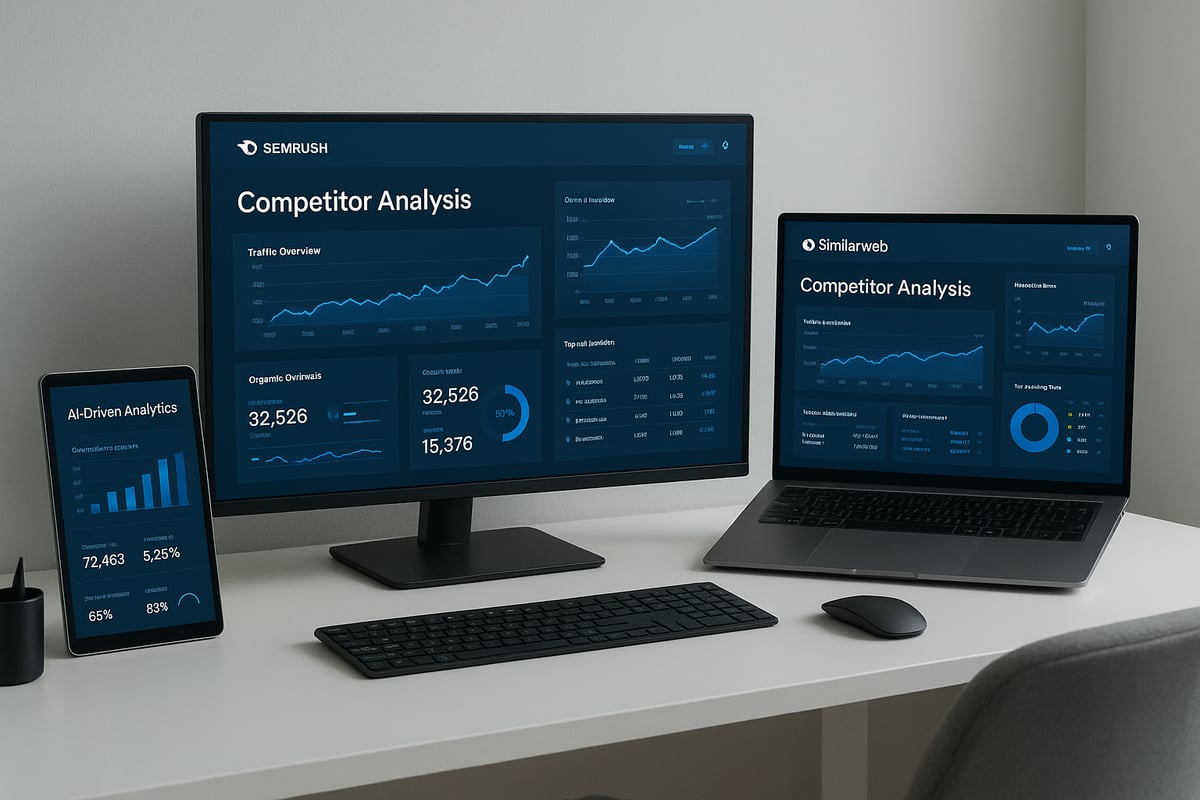
Staying ahead of your competitors in 2026 requires more than intuition. The right tools can reveal hidden threats, surface new opportunities, and help you pivot faster in an AI-driven world. With the competitive landscape evolving rapidly, understanding which platforms to use is crucial for gaining actionable intelligence.
Essential Tools for Analyzing Your Competitors
A robust competitor analysis toolkit is the foundation for monitoring your competitors. In 2026, some of the most effective platforms include:
| Tool | Primary Use | Unique Feature |
|---|---|---|
| Google Trends | Market trend spotting | Real-time search interest data |
| SimilarWeb | Website traffic analysis | Competitor website benchmarking |
| SEMrush | SEO/SEM tracking | Keyword and backlink analytics |
| Ahrefs | Link and content analysis | Deep backlink research |
| BuzzSumo | Content intelligence | Viral content and influencer data |
| Brandwatch | Social listening | Sentiment and trend analysis |
These tools empower you to track your competitors’ digital strategies, discover what content performs, and spot shifts in market sentiment.
AI-Powered Platforms and Emerging Technologies
The rise of AI has introduced a new generation of platforms for analyzing your competitors. Solutions like Klue and Kompyte gather intelligence from multiple sources, automate reporting, and deliver insights in real time. AEO (Answer Engine Optimization) and GEO (Generative Engine Optimization) tools help you track how your competitors are appearing in AI-driven search results.
For small businesses, leveraging AI tools for competitive analysis can level the playing field, offering deep insights without requiring an enterprise budget. These platforms use machine learning to monitor shifts in digital presence, content gaps, and even changes in ad spend.
Free vs Paid: Choosing the Right Tools
Deciding between free and paid tools depends on the depth of analysis you need. Free versions of SEMrush or SimilarWeb offer limited data, suitable for initial scans of your competitors. However, paid subscriptions unlock advanced features like historical trend analysis, competitor keyword tracking, and multi-channel monitoring.
If your competitors are investing in AI-driven strategies, upgrading to paid platforms may be necessary to keep pace. Real-time alerts and comprehensive reporting can make the difference between reacting and anticipating market moves.
Platform Features to Prioritize
When evaluating platforms for tracking your competitors, prioritize these features:
- Real-time data feeds and alerts
- Comprehensive keyword and backlink analysis
- Social listening and sentiment tracking
- AI-driven content gap analysis
- Integration with existing marketing tools
These capabilities ensure you never miss a strategic move by your competitors, no matter how quickly the landscape changes.
Example Use Cases
Consider a brand using SEMrush to identify which keywords your competitors are targeting for organic search. By combining this with Brandwatch, you can track social sentiment and pinpoint where rival campaigns are gaining traction.
A retailer might use SimilarWeb to benchmark website traffic against your competitors, then deploy AI-powered alerts for new product launches or digital campaigns.
Why the Right Toolset Matters in 2026
Businesses adopting AI-driven competitor analysis tools report generating insights 30% faster than those relying on manual research. With your competitors constantly evolving, having the right platforms in place is essential for continuous monitoring and rapid response.
In 2026, digital and AI competitors can emerge overnight. By investing in the right tools, you ensure you are never caught off guard and can consistently outperform your competitors in any market condition.
Turning Competitor Insights Into Actionable Strategies
Turning insights about your competitors into winning strategies is the key to sustained growth in 2026. In a landscape defined by rapid market shifts and AI-powered discovery, simply knowing your competitors is not enough. You need to act on those insights with precision, speed, and creativity.

From Data to Decisions: The Action Framework
Start by transforming competitor research into actionable steps. Gather intelligence on your competitors' keyword rankings, content performance, and social media tactics. Use this data to guide marketing campaigns, new product launches, and customer engagement efforts.
For example, if you discover that your competitors are dominating certain keywords but neglecting emerging topics, this is your opportunity to step in. Similarly, analyze their customer feedback and reviews to find weaknesses you can address in your own offerings.
Action Steps:
- Audit your competitors’ top-performing content and identify topics they have not fully covered.
- Compare product features, pricing, and customer service experiences.
- Use competitor social media analysis to spot gaps in audience engagement or trending topics.
Exploiting Keyword and Content Gaps
Identifying and filling gaps in your competitors’ keyword and content strategies can quickly boost your visibility. Tools like SEMrush, Ahrefs, and BuzzSumo help you uncover which keywords are under-served, allowing you to create targeted content that attracts new audiences.
Consider using a table to organize your findings:
| Opportunity Type | Competitor Status | Your Next Move |
|---|---|---|
| High-value keyword | Low competition | Create optimized content |
| Trending topic | Ignored | Launch a campaign |
| Customer service | Weak reviews | Enhance your support |
By acting on these insights, you can outperform your competitors in both organic and paid channels.
Differentiation and Innovation
Standing out from your competitors means more than matching their moves. Develop a unique value proposition that addresses unmet needs. Innovate with new products, features, or experiences that set you apart.
For instance, if your competitors rely on traditional search optimization, explore Generative Engine Optimization to gain visibility in AI-powered discovery engines. This approach can help you reach audiences before your competitors even realize the opportunity exists.
Using Insights for Pricing, Messaging, and Experience
Competitor analysis can also inform pricing decisions and messaging strategies. If your competitors are undercutting you on price but offering less value, highlight your strengths in marketing materials. Alternatively, if you notice a gap in customer experience, invest in AI-powered support tools to exceed expectations.
Quick Wins Checklist:
- Target under-served keywords your competitors miss.
- Adjust ad spend to exploit less competitive markets.
- Monitor social listening for unmet needs and trending discussions.
- Benchmark your customer reviews and ratings against your competitors.
Take Decisive Action for Growth
Success in 2026 belongs to those who move swiftly from insight to action. According to Qualtrics, companies that benchmark and act on competitor data see a 20% increase in market share. Do not wait for your competitors to catch up. Use every insight as a springboard for innovation and differentiation.
By consistently turning competitor research into actionable strategies, you ensure your business not only keeps pace but leads the market.
Future-Proofing Your Competitive Advantage for 2026 and Beyond
In 2026, the rapid evolution of technology is rewriting the rules for outperforming your competitors. As AI-driven platforms and digital disruptors reshape the market, staying ahead requires a mindset focused on continuous innovation and strategic foresight.
The traditional boundaries that once defined your competitors are dissolving. AI-powered search engines and recommendation systems are not only changing how customers discover products, but also who they trust. According to Gartner’s prediction, search engine volume is expected to drop by 25 percent by 2026, as consumers increasingly turn to AI chatbots and virtual agents. This shift means your competitors now include not just traditional rivals, but also those who dominate new digital and AI-powered channels.
To future-proof your competitive advantage, it is essential to adopt a proactive, rather than reactive, approach. Instead of waiting for your competitors to make the first move, anticipate shifts in technology, consumer behavior, and market dynamics. This involves regularly tracking emerging trends, experimenting with AI-driven tools, and fostering a culture where innovation thrives.
Integrating competitive intelligence into your company’s daily operations empowers teams at every level to make informed decisions. Embrace frameworks like Answer Engine Optimization (AEO) and Generative Engine Optimization (GEO) to ensure your brand remains visible across both traditional search and AI-powered discovery platforms. Businesses that prioritize multi-platform visibility and adapt their strategies quickly are already outperforming their competitors in the digital age.
Consider the following table as a blueprint for future-proofing your competitive advantage:
| Action | Benefit | Example Outcome |
|---|---|---|
| Continuous AI-driven competitor monitoring | Early detection of new rivals | Rapid response to market entrants |
| Multi-platform optimization | Broader audience reach | Increased brand visibility |
| AEO/GEO adoption | Higher ranking in AI-generated results | Brand featured in chatbot answers |
| Culture of innovation | Sustained differentiation | Unique product offerings |
| Real-time data integration | Faster, smarter decisions | Agile marketing adjustments |
Real-world examples show that companies investing in AI-powered competitor analysis are seeing significant returns. In fact, 60 percent of businesses plan to increase investment in AI-driven competitive intelligence by 2027, underscoring the urgency of staying a step ahead of your competitors. Leveraging advanced strategies, as outlined in AI and SEO Strategies, can help you adapt to new algorithms and audience behaviors before your rivals do.
Ultimately, the winners in 2026 will be those who make future-proofing a core part of their strategy. By continuously monitoring your competitors, embracing AI and multi-platform optimization, and fostering a culture of proactive innovation, your business can not only adapt to change, but lead it.
FAQ: Understanding and Outperforming Your Competitors in 2026
Staying ahead of your competitors in 2026 means adapting to rapid changes in technology, data, and consumer behavior. Below, we answer the most pressing questions leaders have about outperforming your competitors in the digital era.
What are the most effective ways to identify new competitors in 2026?
To spot your competitors, combine AI-powered tools, market research, and customer feedback. Attend industry events and monitor online communities for new entrants. Pay close attention to AI-driven platforms, since many competitors may emerge digitally, not just physically.
How do AI and generative search platforms change competitor analysis?
AI and generative search platforms now surface brands and solutions that may not be direct rivals but still compete for your audience. These engines can recommend your competitors based on content relevance, so tracking recommendations and AI mentions is as vital as monitoring traditional rivals.
Which tools are best for tracking both traditional and AI-driven competitors?
Your competitors can be tracked using platforms like SEMrush, Ahrefs, and advanced solutions such as SOMONITOR: Combining Explainable AI & Large Language Models for Marketing Analytics. These tools offer real-time alerts, AI-driven insights, and multi-platform tracking for a comprehensive view.
How often should I update my competitor analysis?
Review your competitors quarterly at a minimum. However, in fast-moving industries or when using AI-driven channels, monthly updates ensure your data stays relevant and actionable. Set up automated alerts for major changes or new entrants.
What are the biggest mistakes businesses make when analyzing competitors?
Many businesses only look at direct competitors or fail to monitor digital and AI-driven challengers. Overlooking content and recommendation engines, or ignoring indirect substitutes, can cause you to miss threats and opportunities in your competitive landscape.
How can small businesses compete with larger, AI-savvy rivals?
Focus on agility, niche targeting, and customer experience. Small businesses can outperform your competitors by quickly adapting, personalizing services, and leveraging local or specialized knowledge that larger firms may overlook. Use affordable digital and AI tools for efficiency.
What is AEO/GEO and why does it matter for competitive strategy?
Answer Engine Optimization (AEO) and Generative Engine Optimization (GEO) help your competitors gain visibility in AI-powered search and recommendation engines. Optimizing for these platforms ensures your brand appears in AI-generated responses, not just traditional search results.
How do I turn competitor insights into actionable marketing wins?
Analyze where your competitors are strong or weak, then fill those gaps. For example, target keywords or content your competitors miss, and refine your messaging. For more on avoiding common SEO pitfalls, see 7 SEO Mistakes and ChatGPT.
How can I measure the ROI of my competitor analysis efforts?
Track metrics such as increased traffic, higher conversion rates, improved keyword rankings, and market share growth. Compare performance before and after implementing insights from your competitor analysis to calculate tangible business impact.
Now that you’ve explored how AI is reshaping the competitive landscape and discovered practical steps to stay ahead, it’s clear that winning in 2026 demands more than just traditional SEO. If you’re ready to put these strategies into action and want guidance tailored to your unique business challenges, let’s connect. Together, we can map out a future-proof approach that maximizes your visibility on both search engines and emerging AI platforms—without the hassle of long-term contracts or hidden fees. Take the next step and Book a call to start outperforming your competitors with confidence.